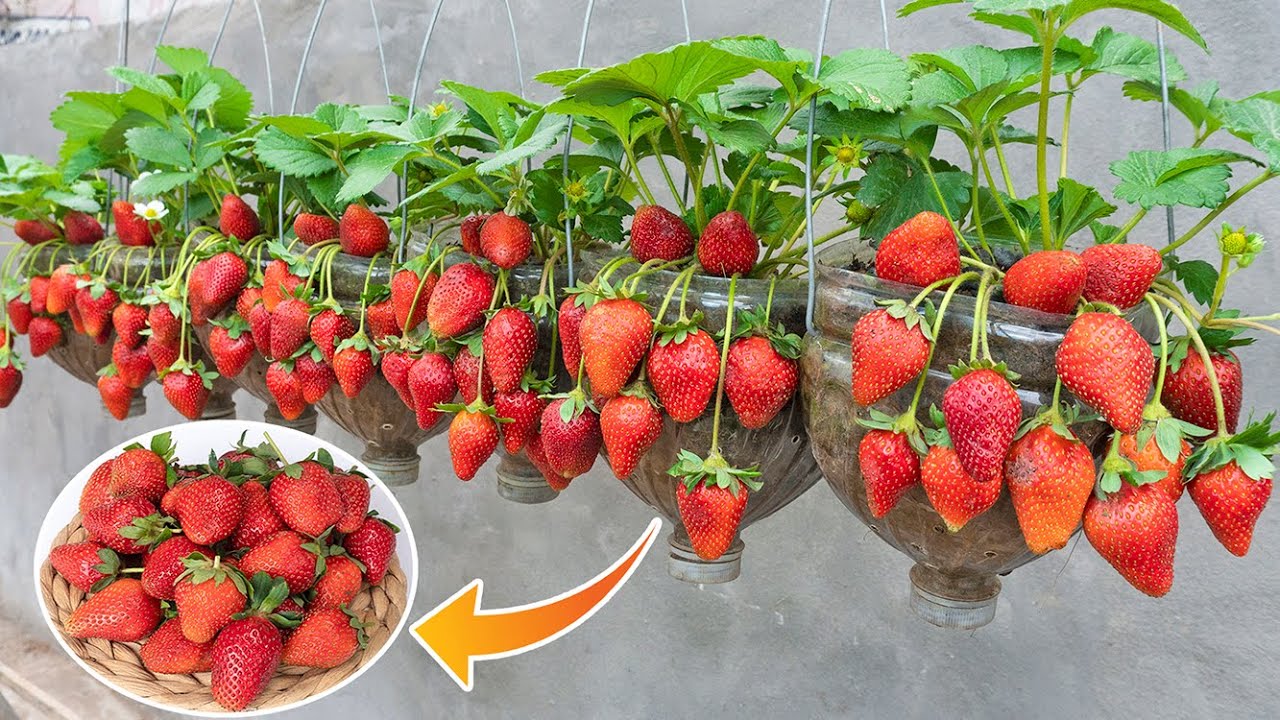
How I Grew Juicy Strawberries in a Plastic Cup (Really!)
I’ll start by admitting that the idea wasn’t mine.
My daughter is six years old, and last summer she walked into the kitchen with a plastic coffee cup—one of those clear, 400-milliliter ones—and told me she wanted to grow strawberries in it. I don’t know where she saw it. Probably TikTok, even though I officially don’t let her use TikTok—but kids find a way.
I told her, “Okay, let’s give it a try.”
Deep down, I thought she’d forget about it in a week and the cup would end up in the trash. I’ve been wrong about more important things many times, but about this—especially so.
Strawberries have a reputation for being finicky. People with yards plant them in beds, mulch them, tend to them all summer long, and even then, the results are sometimes disappointing. I wanted to grow them in a plastic cup on my windowsill.
The first thing I did was look online to see if it was even possible. I found half a dozen articles, all saying “yes, it works!” with the same enthusiasm you get from an author who’s never actually done it themselves. I also found two comments from people who wrote that they’d tried it and it didn’t work.
I decided to give it a try and see what happens.
The cup. So, 400 milliliters is a bit too little. I’ll just say it straight out—it works, but it’s cutting it close. Better yet, 500–600 milliliters if you can find them. Or those plastic beer cups from picnics—500 milliliters, clear—they cost next to nothing.
The important thing is the holes in the bottom. I took a knife and poked 5–6 holes, 3–4 millimeters wide. Without drainage—the roots rot within 48 hours in standing water, and then you have to explain to a six-year-old why the strawberry died.
I placed the cup on a saucer so it wouldn’t leak everywhere. We arranged four cups on the windowsill. They looked absurdly small.
The soil is more important than the container, and that’s where I made a mistake at the start.
I took some all-purpose potting soil, straight from the bag, and filled the cups. Then I read—or rather, it dawned on me—that all-purpose potting soil in a small container compacts quickly and retains a lot of moisture. One of my plants collapsed after three weeks. The other looked sad.
I fixed it—I removed the soil, mixed it with perlite in a ratio of about 60-40. Perlite is that white, foam-like stuff they sell at garden stores. It makes the soil loose and helps with drainage. A 10-liter bag—about 5–6 leva—lasts you several seasons.
The second time I planted them—it went much better. The soil didn’t get waterlogged, the water drained normally, and the roots could breathe.
Now, about the strawberries themselves, because that’s the question everyone asks me—where do they come from?
We have three options.
You can buy ready-to-plant seedlings—from the market in early spring or from a garden center. Ask for “remontant” varieties—they produce fruit in waves throughout the summer, not just once. “Sezon” and “Elzanta” are popular here. The seedlings cost about 0.50–1 lev each.
Take runners from an existing strawberry plant. Strawberries produce long lateral shoots—runners—with a small plant at the end. You snap off the runner, plant the little plant in the soil, and keep it moist. It takes root quickly. It’s free.
Growing from seeds—patience, lots of patience. It takes two to three months to get seedlings. I don’t recommend this for a six-year-old’s plastic cup.
We bought seedlings at the market. The old lady who sold them to us asked me if I was going to plant them in a garden. I told her in a plastic cup. She looked at me, then at my daughter, then back at me. Then she said “okay” in a way that meant it wasn’t a good idea, but honestly, she didn’t care.
Planting.
Fill the cup halfway with soil and perlite. Make a small hole in the center. Carefully—very carefully—place the seedling in the hole, roots down, spread out, without crushing them. Fill in the soil around the plant and press down gently.
Important—the crown, that little spot where the leaves emerge, must be exactly level with the soil. Not below it, not above it. Below it—it rots. Above it—it dries out. Exactly level.
Water carefully, sparingly, and place it in a sunny spot.
Light. Strawberries need sun. Not partial shade, not “mostly bright”—direct sun, at least 6 hours. Without sun, they’ll just grow leaves and nothing else. Beautiful, dark green, useless leaves.
Our first spot was the north-facing windowsill. After a month, I realized why they looked nice but nothing was blooming.
We moved them to the south-facing window. After two weeks—the first flower. Then a second. My daughter came every morning to check on them.
Watering in a plastic cup is a balancing act.
The small container dries out quickly. In hot weather—check every day. Stick your finger in. If it’s dry 3–4 centimeters down—water it. If it’s still moist—wait.
Too much water and the roots rot. Too little and the plant gets stressed and stops blooming. In a small cup, a mistake is more costly than in a large container because you have no buffer.
I watered in the morning, never in the evening. Watering in the evening when it’s warm invites disease.
Fertilizing. Don’t skip it.
In a small pot, the soil depletes quickly. Every time you water, nutrients are washed away. After a month, there’s almost nothing left.
I fertilized with liquid fertilizer for strawberries and berries, diluted in water, once every 10–14 days. Look for a fertilizer with higher potassium and phosphorus and lower nitrogen—nitrogen promotes leaf growth, while potassium and phosphorus promote fruit production. A bottle of liquid fertilizer costing about 7–8 leva will last the entire season if you follow the recommended dosage.
Banana peels in a jar of water, left for a week—dilute 1:5 and water the plants. Potassium, for free. I did both, alternating between them.
Flowering. That’s when I first panicked.
Little white flowers appeared—beautiful. Then two of them fell off without producing any fruit.
I looked it up online. The problem might be pollination—on a balcony or windowsill, you don’t have as many bees or as much wind as you do outside. I took a small makeup brush—my daughter gave me hers—and went from flower to flower, gently touching the center of each one. Literally hand-pollinating.
Then came the small green swell after each pollinated flower. Then the reddening. My daughter checked on them every day.
The first strawberry was about the size of a large grape. Small, not like the ones you find in stores. But red, juicy, and it smelled the way store-bought strawberries don’t—that intense, authentic scent.
My daughter ate it right there on the spot. I didn’t get a chance to try it.
The problems you’re going to have.
Mites—webs on the underside of the leaves; the leaves turn yellow and dry out. They spread quickly in a small container. Spray water with a strong stream on the undersides of the leaves. For more serious infestations—diluted neem oil.
Gray mold on the fruit—appears in damp, stuffy conditions. Remove the affected fruit immediately. Ensure good air circulation.
Birds. If the windowsill is accessible, cover it with netting. The crows in our neighborhood are so brazen it borders on disrespect.
Side shoots—the plant will produce long side shoots that try to take root. There’s no room for them in a small pot. Cut them off, otherwise the plant will divert energy away from the fruit.
How many strawberries in the end?
Honestly? It’s not the yield of a large garden bed. One plant in a cup—150–200 grams of strawberries for the season, if all goes well. It could be more if it’s a remontant variety with several flushes.
But it’s not about the harvest. If you want a harvest—buy a kilo of strawberries at the market for 3 leva.
The point is something else. A six-year-old child who checks every morning to see if the strawberries are ripe. Who wants to “help” with the watering and pours three times as much water as needed. Who eats the first strawberry right there and then says, “Let’s plant more.”
Now we have eight pots on the windowsill.