If your tomato plant flowers but no fruit follows, the pollen is failing, not the plant. Five things break tomato pollen: too much nitrogen, too little sun, heat, still air, and uneven water. Each tomato flower has roughly 50 hours to be pollinated. If you miss that window, the flower dries and drops and just shaking it to stimulate pollination has little evidence of working according to studies.
Why do tomato flowers fall off without making fruit?
Tomato flowers fall off when the pollen never reaches the stigma inside the flower. The stem yellows, the petals dry, and the whole blossom drops. Gardeners call this blossom drop.
Heat, cold, high humidity, still air, excess nitrogen, and drought all block that moment, and the tomato plant can look perfect the whole time. University of Maryland Extension sets a firm time limit. Pollinate tomato flowers within 50 hours, or they will abort.
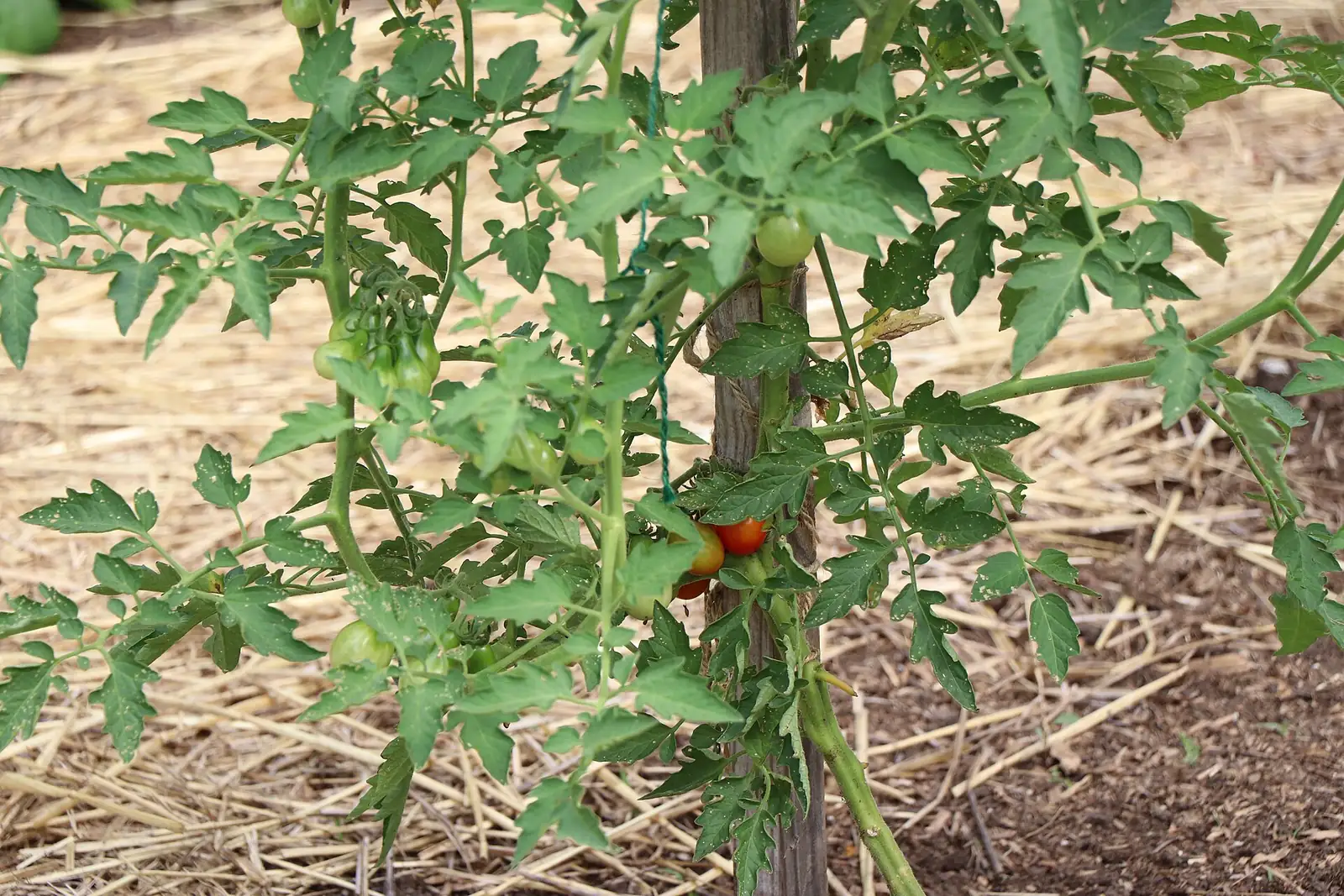
Read your plant first. A big leafy tomato plant with few flowers points to nitrogen or shade. Heavy flowering that yellows and drops points to heat or pollination. Fruit that stalls or cracks points to watering.
Cause 1: Too much nitrogen, so the plant grows leaves instead of tomatoes
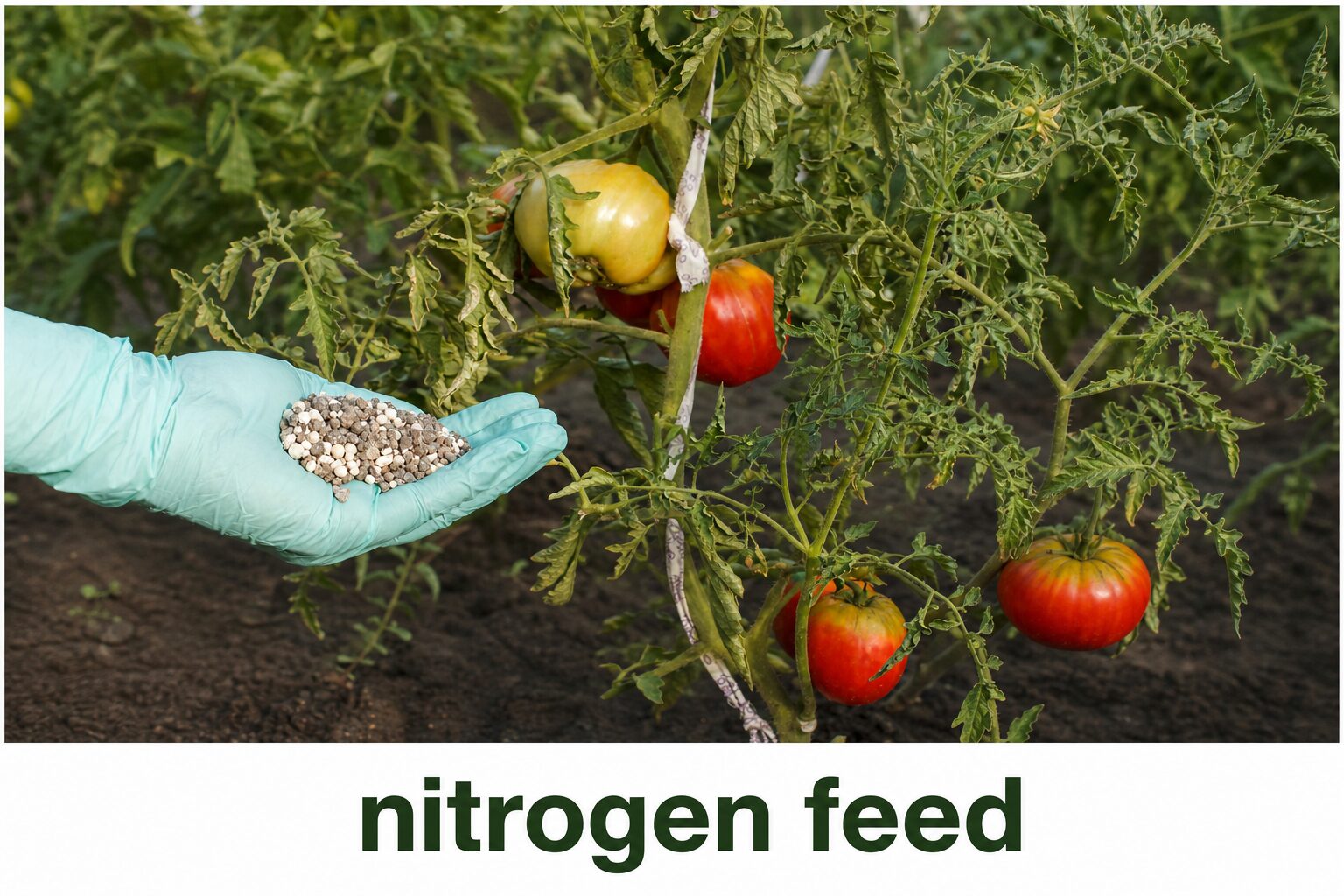
Nitrogen is not the enemy. Overfeeding is. The plant keeps buying leaves and never switches to fruit set.
Penn State Extension is blunt: high-nitrogen fertiliser gives lush foliage. But it can delay flowering and fruiting. Maryland lists excess nitrogen fertilisation as a direct cause of poor blossom and fruit set in the vegetable garden.
The fix: stop the high-nitrogen feed today. Switch to a tomato fertiliser and follow the label. In garden soil, compost plus one balanced feed is enough. In containers, feed lightly and often.
Cause 2: No flowers on tomato plants means not enough sun
Cherry tomatoes get sold as easy patio plants. Easy does not mean shade tolerant. Penn State sets the floor at six hours of direct sun a day, and Maryland lists excessive shade as its own cause of poor fruit set.
Low light hides well, because the tomato plant still grows leaves and stretches toward the window. It simply has no spare energy for flowers.
Crowding does the same from the inside. Move containers away from eaves and railings. Space plants for their mature size. Stake them so flower trusses sit in moving air.
Cause 3: Heat that makes tomato pollen useless
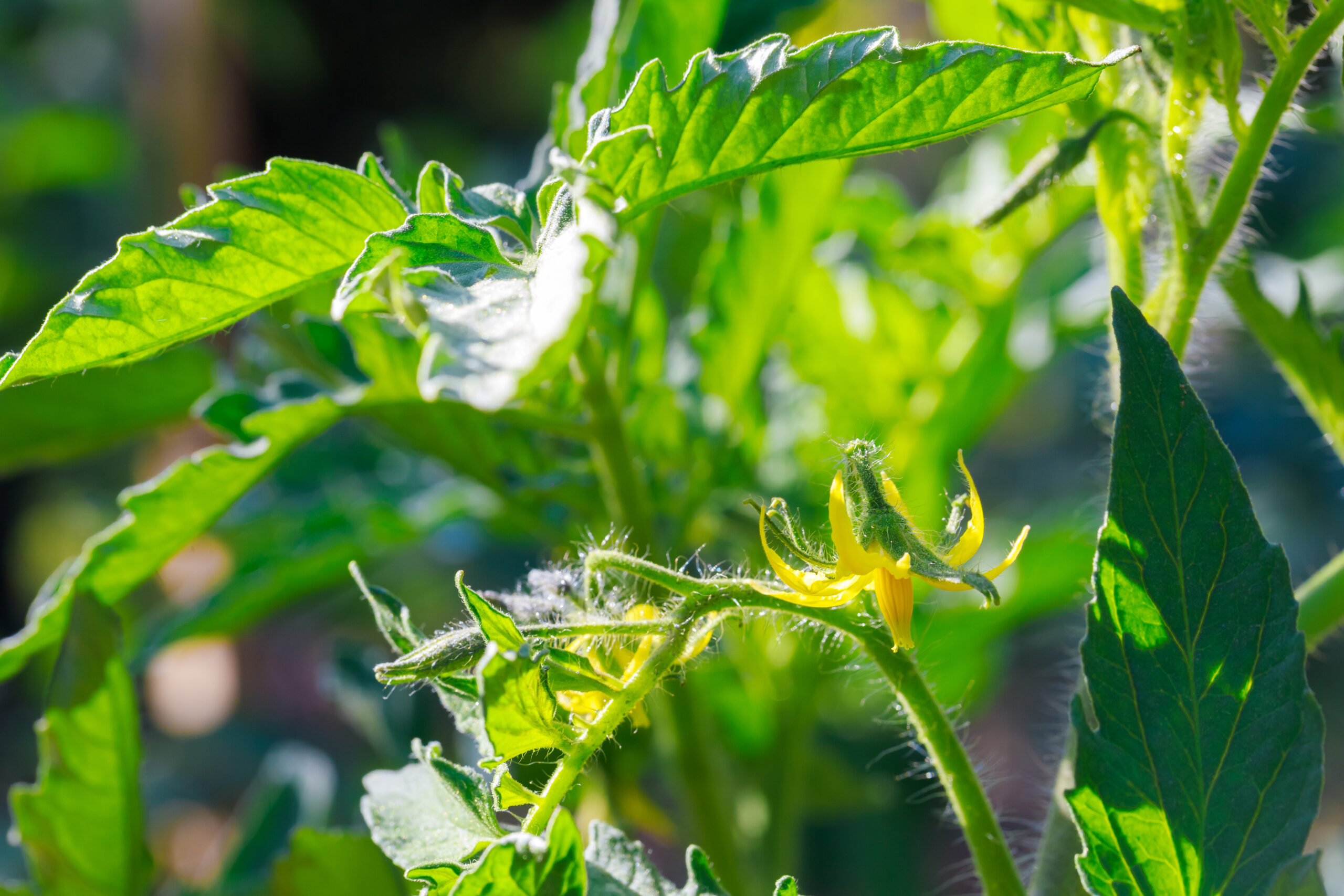
Heat does not wilt the plant. It sterilises the pollen. Above about 32C (90F) by day, with nights near 21C (70F), the pollen turns sticky and non-viable and the blossom drops.
Humidity over 80 percent during pollen shed does the same. At the cold end, nights below 13C (55F) or above 24C (75F) also stop fruit set.
The reassuring part: most varieties make up the loss with heavier flowering once it cools. The real mistake is reaching for fertiliser when the plant only needs time. Water deeply in the morning, mulch, shade the hottest afternoons, and get containers off hot paving.
Cause 4: Poor pollination, and why shaking the plant is oversold
Tomatoes are self-pollinating, but the pollen sits sealed inside the flower and something has to vibrate it loose. Outdoors that is usually wind. On a sheltered balcony or in still, humid greenhouse air, it often does not happen at all.
Now the part almost every guide gets wrong. A meta-analysis of 71 experiments in 24 studies found clear results.
Buzz-pollinating bees and open pollination increased tomato fruit weight.
Artificial mechanical vibration and non-buzzing bees, like honeybees, did not. A finger is not a bumblebee. Bumblebees buzz at roughly 250 to 400 Hz, and later research shows the frequency does the work, not the tapping.
So, the honest way to pollinate tomato plants at home is this:
- Plant for bumblebees.
- Stop spraying open flowers.
- Open the vines so fresh air reaches the trusses.
- If you grow fully enclosed, choose the right vibrating wand.
Cause 5: Watering that swings from dry to soaked
Steady moisture drives flower development and fruit swell. Swinging between bone dry and soaked brings blossom drop, cracking, and blossom end rot.
Maryland ties poor fruit set to prolonged dry or wet soil. Check the soil before watering rather than the calendar, water deep and at the base, and never let the root ball go dry. Five gallons is the minimum container size.
A quick diagnostic checklist for better fruit set
When a cherry tomato is not producing, work through the likely causes in order. This keeps you from adding fertilizer when the actual problem is heat, shade, or pollination.
Check these five things first:
- Plant shape: huge and leafy with few flowers often points to excess nitrogen or low light.
- Flower behavior: flowers that dry and drop often point to temperature stress or poor pollination.
- Sun exposure: fewer than six hours of direct sun can limit productivity.
- Air movement: sheltered patios, indoor setups, and crowded vines may need gentle flower vibration.
- Soil moisture: repeated wilting, dry pots, or soggy soil can all interfere with steady production.
Also remember timing. Newly transplanted tomatoes may need time to build roots before they carry a heavy crop. Very hot weeks can interrupt fruit set, but the next round of flowers may perform better when conditions improve.
Do cherry tomatoes have the same problem?
Yes, with two differences. Cherry tomatoes set fruit better in heat than big slicers, so they often keep going when beefsteaks stall. But they crack more easily, because a sudden soak after a dry spell splits the thin skin.
How long after flowering do tomatoes appear?
You should see a small green tomato within 5 to 10 days of successful pollination. Cherry types ripen 20 to 30 days after that. If two weeks pass with flowers but nothing swelling behind them, pollination is failing.
Find your cause in two minutes
Plant shape: big and leafy means nitrogen or shade. Flower behaviour: a clean drop with a yellow stem means heat or pollination.
Sun hours: count them honestly, because under six caps everything.
Air: a sheltered balcony or packed vines means pollination. Soil: wilting, dry containers, or soggy beds mean water.
Almost none of this is disease. It is a tomato plant answering the conditions you gave it. Fix one thing, give it two weeks, and grow for the next cluster.
Watch the full walkthrough on the Gradina Space channel.
Sources:
- University of Maryland Extension — Expect Poor Fruit Set in Tomatoes This Week
- Penn State Extension — Tomatoes: From Seedlings to Fruit
- University of Maryland Extension — Poor Blossom and Fruit Set of Vegetables
- Journal of Economic Entomology — Buzz-Pollinated Crops: A Global Review and Meta-analysis
- Horticulture Research — Sonic-induced cellular vibrations and tomato fruit size
- later research shows the frequency does the work
Written by Denislav from Gradina Space, where we test gardening advice in a Bulgarian garden before we repeat it. This article follows guidance from University of Maryland Extension, Penn State Extension, and peer-reviewed pollination research, linked throughout.
Related reading: Budget container vegetable garden ideas and Effective homemade weed killer recipes