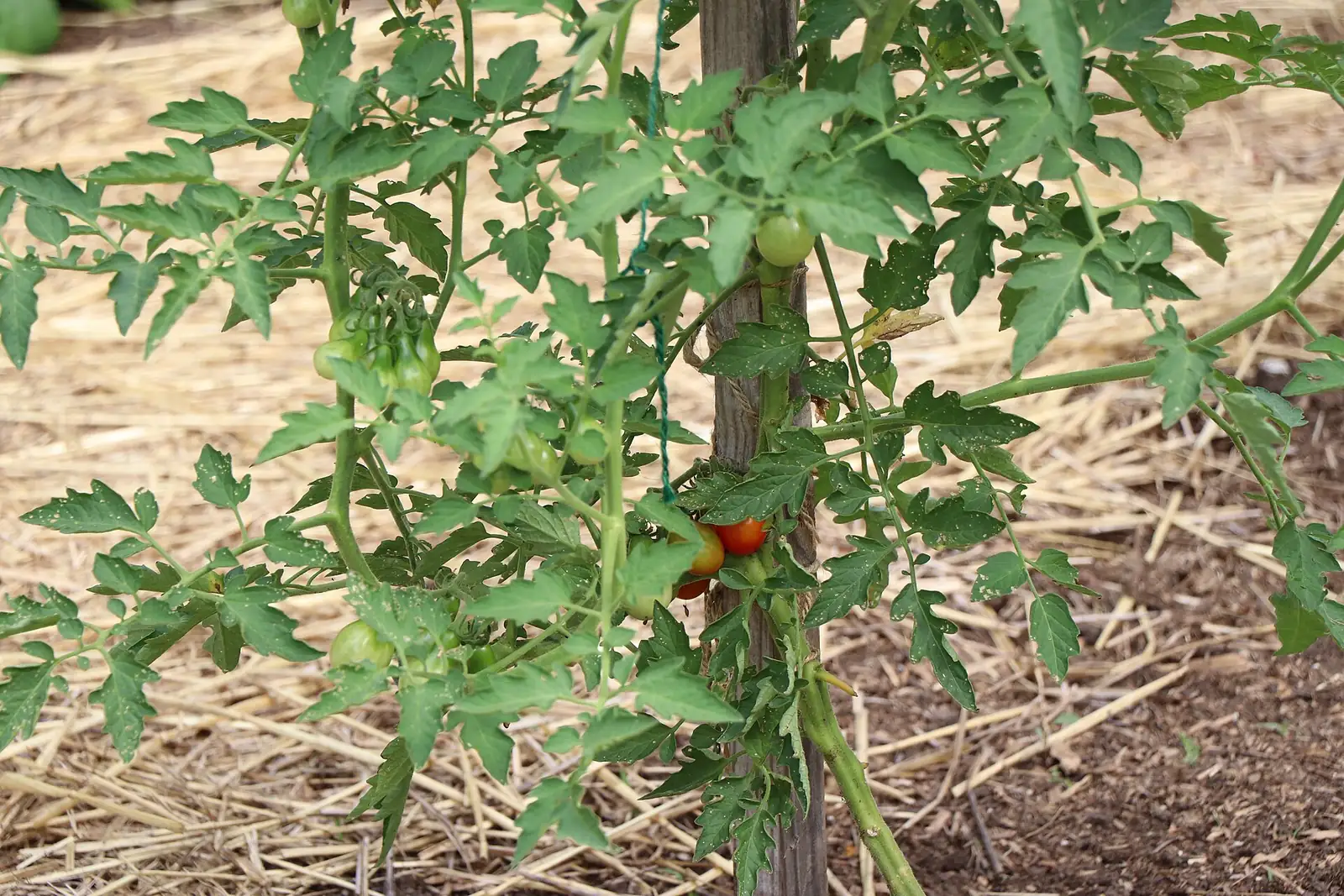
Companion planting for tomatoes is just me being intentional about what I tuck in around the vines. A few neighbors pull in the good bugs (pollinators and the tiny pest-munchers that count as beneficial insects). Some plants stink—in the nicest way—and that scent can throw pests off the trail. Low growers shade the soil so it doesn’t turn into a crusty hot skillet, and quick little crops like cilantro or radishes let me harvest something early while the tomatoes are still figuring life out. Good tomato companion plants won’t magically double your haul. But they can make the whole bed feel more balanced and a whole lot easier to manage without reaching for sprays.
At Gradina.Space we treat this like smart bed design, not old garden myths. Tomatoes still need the basics: 6–8 hours of real sun, deep soil, steady watering, airflow, and enough nutrients to keep them chugging along. Companions can support those needs. They can’t replace them.
Which companion plants help tomatoes the most?
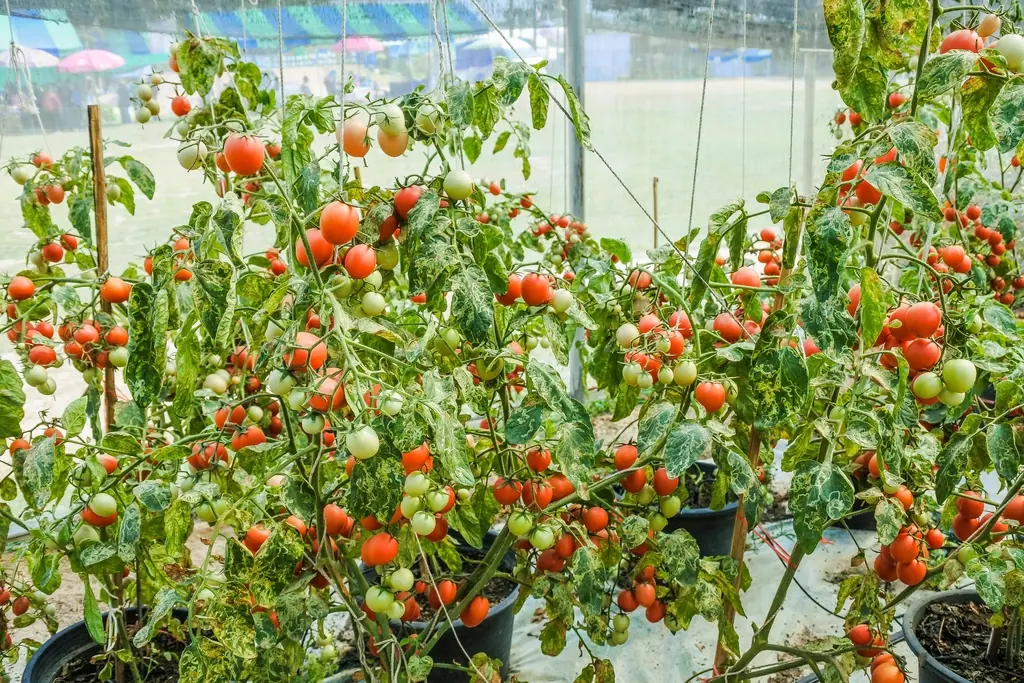
In my experience, the winners are aromatic herbs, small flowering annuals, alliums, legumes, and a few low, tidy crops. If you want a solid starting lineup, try basil, marigolds, calendula, nasturtiums, chives, garlic, parsley, cilantro, thyme, oregano, borage, and bush beans.
Then I’d trim that list of tomato companion options down based on two things: space, and whatever pests love your garden most.
I like to ask one simple question first—what’s my bed missing? Not many bees? Soil getting scorched and bare in July? Aphids rolling in like clockwork every June? Or maybe you just want something to snip and eat in May before the tomatoes take over. Those answers make picking companions way easier than staring at a giant chart.
Tomatoes are hungry plants, and they squat in the same spot for a long stretch—usually late spring all the way to the first frost. What they don’t like is wet, crowded foliage, because that’s when early blight and septoria leaf spot start acting up. What they do like? Lively soil, cooler roots, and plenty of insect activity. So I plant companions close enough to matter, but not so thick that the lower part of the bed stays dark, damp, and still.
Tomatoes are the main event in the tomato bed. Everything else has to earn its keep.
Best tomato companion plants by purpose
When I’m choosing companion plants for tomatoes, I start with a simple rule: pick two or three “jobs” I want done, then plant for that. A 4-by-8 bed can’t do it all, and if you try to cram in everything, you’ll end up with a tangled jungle you can’t water, weed, or even walk past.
| Purpose | Strong choices | How they help |
|---|---|---|
| Pest confusion | Basil, chives, garlic, onions, thyme, oregano | Aromatic foliage can make it harder for some pests to locate host plants |
| Beneficial insects | Calendula, borage, dill, cilantro, parsley, cosmos, zinnias | Flowers feed hoverflies, parasitic wasps, bees, and other helpful insects |
| Trap cropping | Nasturtiums, calendula | Can draw aphids or other pests away from tomatoes, making monitoring easier |
| Soil cover | Bush beans, low herbs, shallow-rooted greens | Shade soil, reduce splashback, and help conserve moisture |
| Seasonal use of space | Cilantro, parsley, dill, onions, carrots | Grow early or in partial shade before tomatoes dominate the bed |
| Root-zone support | Marigolds, legumes, low annual flowers | Increase diversity around the tomato root area and support garden biology |
In the real world, it usually turns into layers. I’ll run a little ribbon of flowers along the front edge for insects, tuck a few herbs into gaps, and then use something low to keep the soil from baking. The tomatoes get the prime real estate in the middle, where the sun hits hardest and the air moves.
What does basil do for tomatoes?
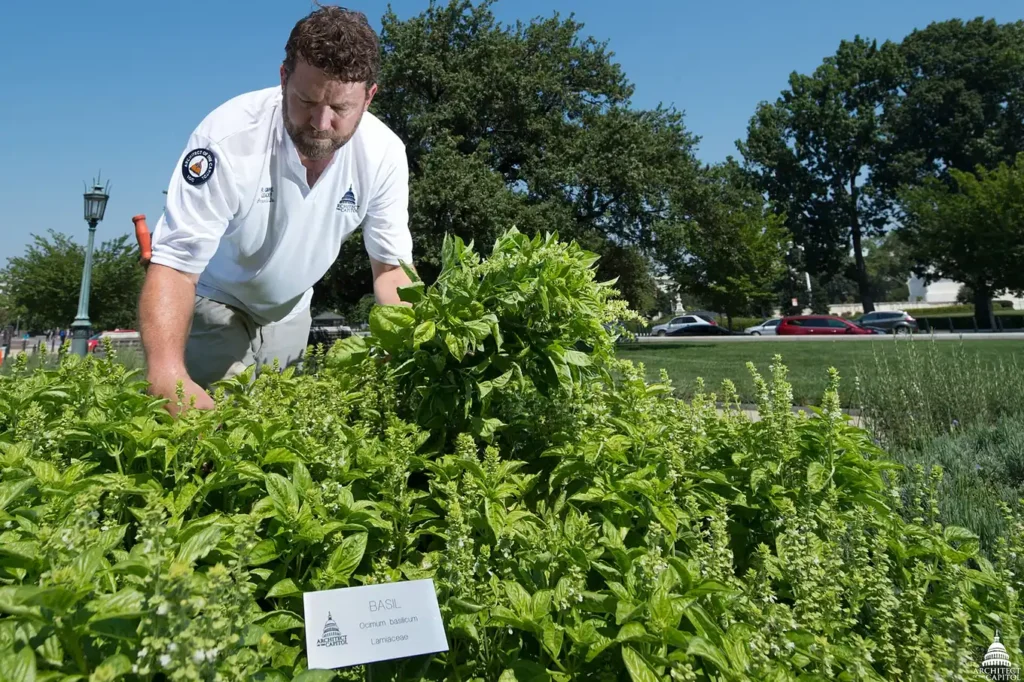
Basil and tomatoes are basically summer buddies. Same love for heat and sun, and basil stays nicely behaved if you keep harvesting it. It may help muddle the scent trail for pests like aphids, whiteflies, and hornworms—and honestly, I mainly love that I can grab basil for sauce without leaving the tomato bed.
I wait until after the last frost and until nights are reliably above about 50°F. Basil hates the cold. It’ll sulk, then blacken, and that’s that. ‘Genovese’ is the classic sweet basil, but compact types like ‘Spicy Globe’ are handy when you’re trying to fit things around a cage. I plant basil near tomatoes, on the outside of the cage or between well-spaced tomatoes—about 12 to 18 inches out from the main stem. Close, but not jammed right up against it.
To keep it bushy, I pinch the top pair of leaves every week or so. Quick snip. Done. It branches instead of shooting straight up and shading everything.
I don’t let basil turn into a solid hedge, though. A dense mat holds moisture right at soil level, and in a humid summer that’s exactly what I don’t want under tomatoes. If I’m already seeing brown spots on the lower leaves of a tomato plant, I prune it up off the ground and scoot the basil a little farther out.
How do marigolds support a tomato bed?
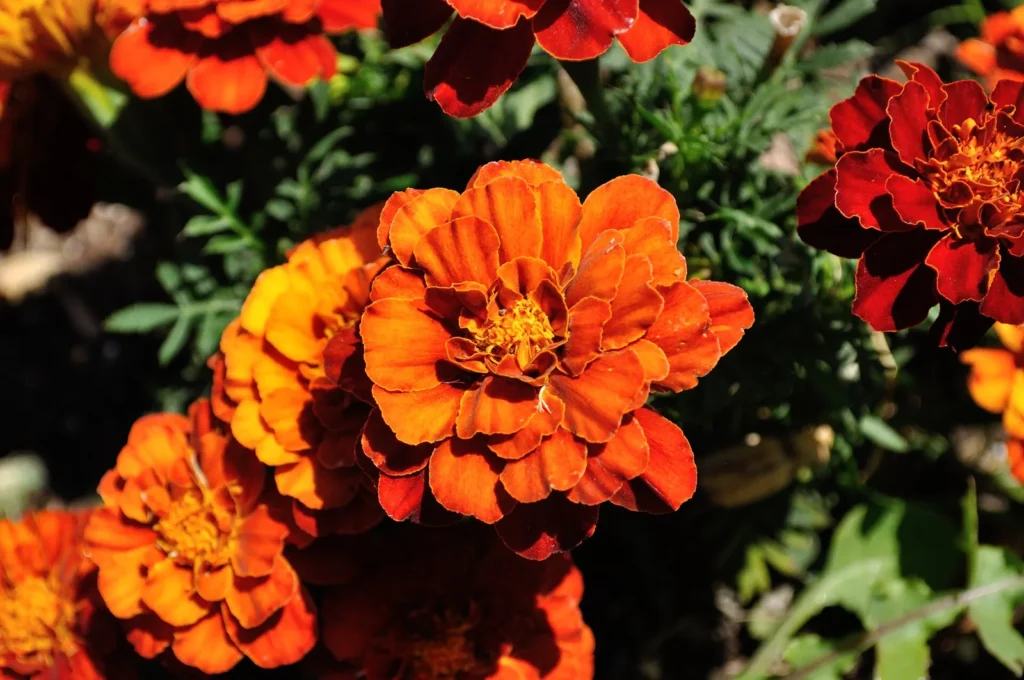
Marigolds do a few things at once: bright color, different roots working the soil, and some pest help—especially if you get them in early. French marigolds (Tagetes patula) are my go-to for veggie beds because they stay around 6 to 12 inches tall and keep blooming from early summer right to frost.
A lot of the marigold hype centers on root-knot nematodes, and here’s the part people skip: you usually need marigold roots in that soil for a while to see an effect. Think a dense planting growing for roughly two months or more before the crop you’re trying to protect. One lonely marigold popped next to a struggling tomato isn’t a magic fix. If nematodes are a known headache in a bed, I’d plant marigolds thickly the season before, or use them as edging and corners right from the start.
Up top, it’s simpler. The blooms bring in beneficial insects, and they break up the “wall of tomato.” A lot of pests hunt by smell and shape, so a bed that’s not one big monocrop can be a little harder for them to zero in on.
Why use calendula, nasturtiums, and borage?
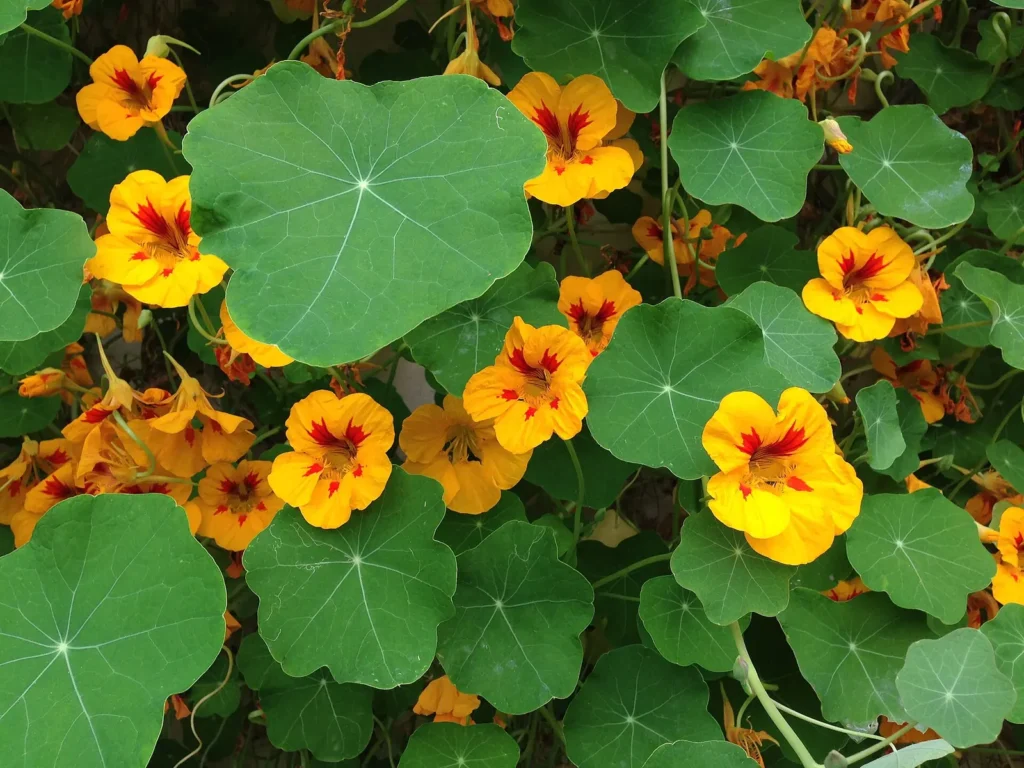
These three are my “mess it up in a good way” plants. They pull in pollinators and also the predators that keep pests in check, which matters if your tomato plant flowers but no fruit sets. I reach for them when the garden feels too bare, too tidy, or way too heavy on one crop.
Calendula is easy from seed and it often attracts aphids. That’s not automatically bad. I treat it like a scouting plant—something I check first, not something that’s supposed to absorb every aphid in the neighborhood. If I spot aphids on calendula, I can snip off those stems, blast them with the hose, or even leave a bit so lady beetles and hoverfly larvae have something to snack on.
Nasturtiums can work the same way. Trailing types spread a few feet, so I put them on the outer edge where they can spill over the side instead of climbing up tomato stems. And if you’ve got humid summers, don’t park them right at the tomato’s base—those round leaves hold water.
Borage is a bee magnet. It’s also a big, prickly, floppy plant—2 to 3 feet tall and wide if it’s happy. I give it an end-of-bed spot or somewhere close by, not dead center in the tomato row. It reseeds like crazy too, so I pull the extra seedlings out of the tomato bed in spring before it turns into a borage convention.
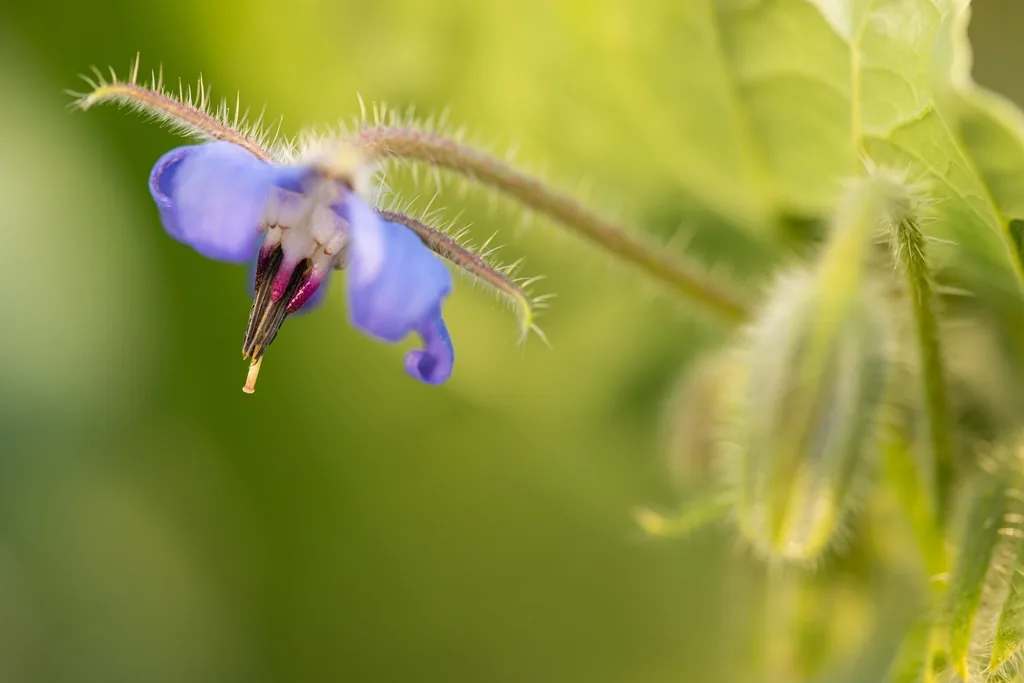
Which herbs attract beneficial insects?
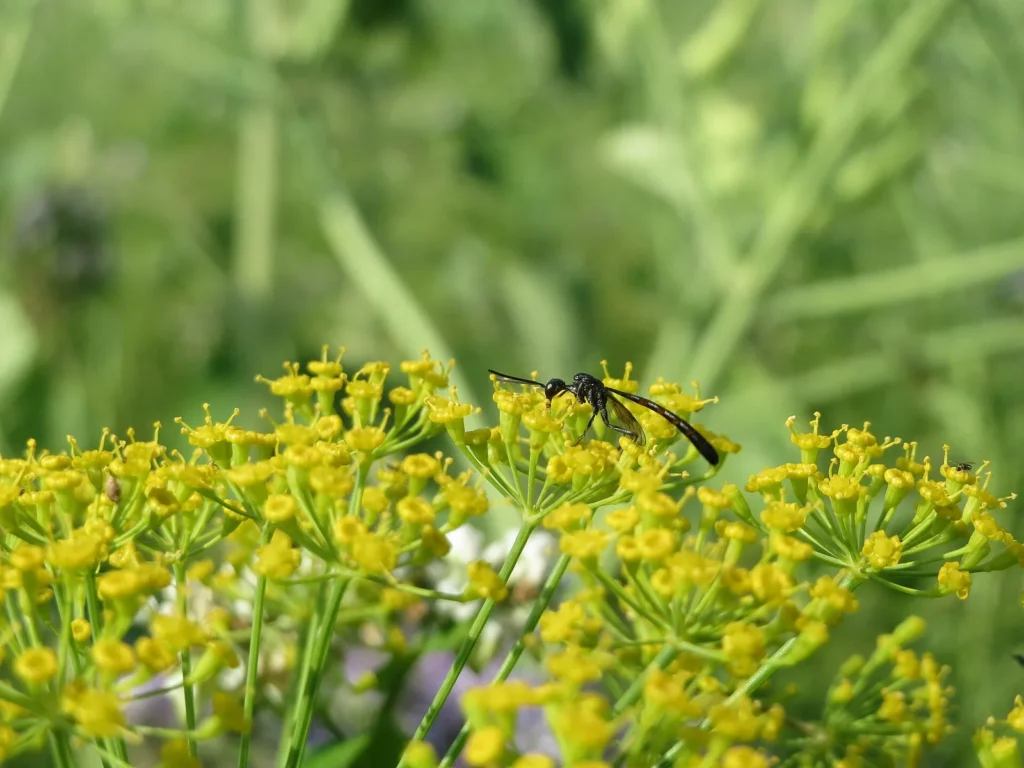
Cilantro, dill, parsley, thyme, oregano, and lavender all start paying rent once they flower. The blooms are tiny and shallow, which is perfect for the smallest helpers—little parasitic wasps, hoverflies, and other beneficial insects that can’t use big, deep flowers.
Cilantro and dill bolt when it heats up. Annoying if you were planning on salsa. Fantastic if you want beneficial insects on your side. I usually let a few plants go to flower before I pull them, because they tend to bloom right around early summer—about the same time tomato pests start ramping up.
Parsley is slow and steady. It can just hang out near tomatoes all season, and if it overwinters (often in zone 7 and warmer), it’ll flower the next spring. Thyme, oregano, and lavender are the oddballs here—they like leaner soil and sharper drainage than tomatoes do. So I keep them on the bed edge or in pots nearby. Lavender especially will sulk or rot if it’s sitting in rich, constantly watered tomato soil.
Are chives, garlic, and onions good companions?
Yes, they’re reliable tomato companion plants—if you don’t cram them in like you’re planting a lawn. Their smell may help throw some pests off, and if you let a few bloom, bees really do use the flowers.
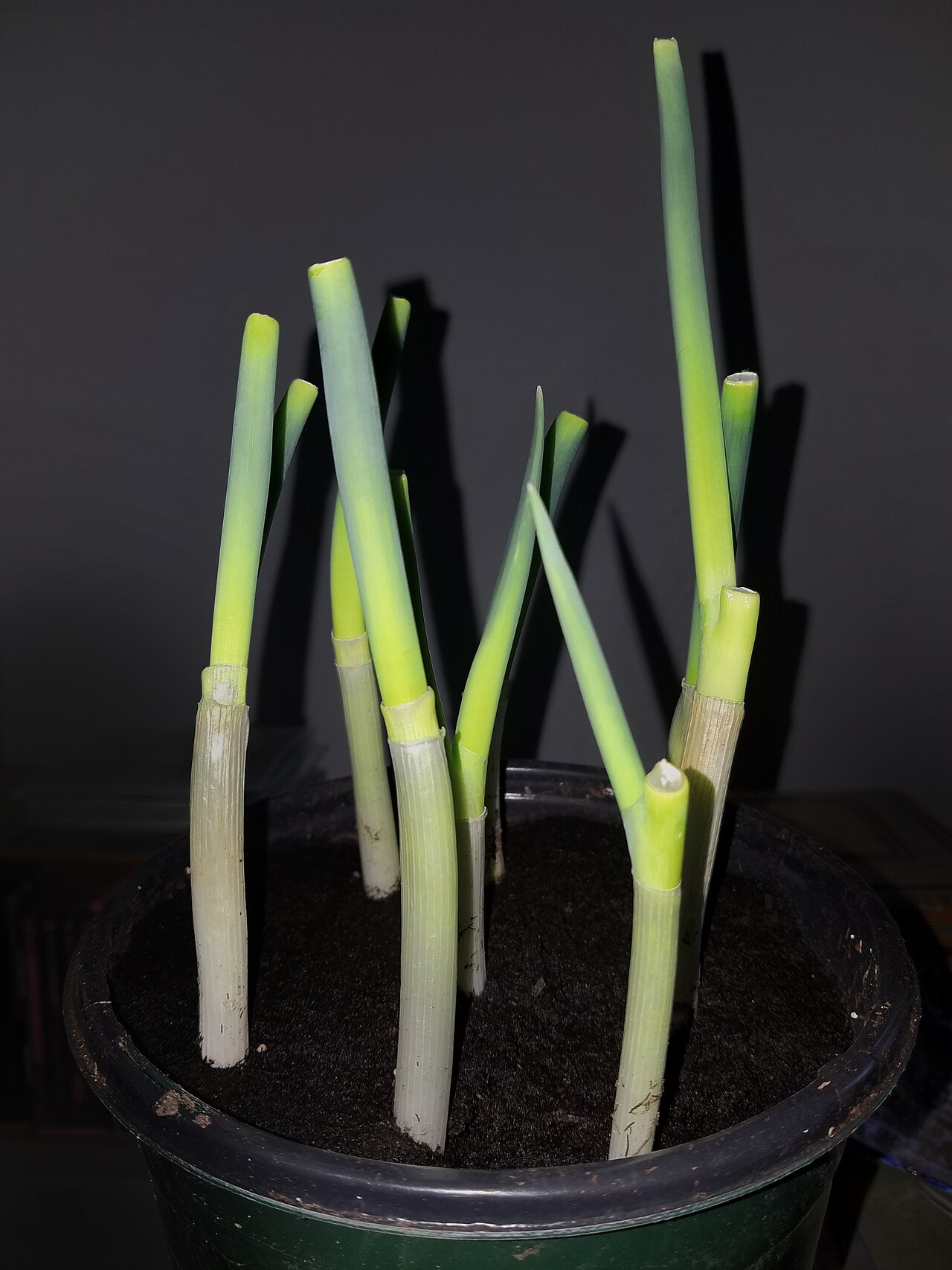
Alliums are skinny and upright, so they’re great in tight spaces. Garlic planted in fall (October in most of zones 5 to 7) grows through spring and comes out in early to mid summer, right when tomatoes are starting to set fruit and appreciate the extra elbow room. Onion sets planted in early spring also make good use of space the tomatoes won’t need for a couple months.
Where people run into trouble is planting alliums thickly right in the tomato root zone. Tomato roots spread wide—often 2 feet or more out from the stem—and onions and garlic still need water and nutrients even though they don’t shade much. I plant them as a strip or a few small clumps, not a carpet under the tomatoes.
Can beans grow with tomatoes?
Bush beans can work with tomatoes if the bed is sunny, fertile, and not packed too tight. I like how their low leaves shade the soil. And yes, legumes play a role in nitrogen cycling—but they’re not an instant tomato fertilizer.
Beans “fix” nitrogen with bacteria on their roots, but most of that nitrogen stays in the bean plant. Tomatoes get the payoff later, after the bean roots and leftovers break down. So the real benefit is more next season than right now. If your tomatoes are looking pale and hungry, they need feeding today, not a promise for later.
I stick with bush beans like ‘Provider’ or ‘Contender,’ not pole beans—unless the beans have their own trellis. Pole beans climbing the same cage as an indeterminate tomato turns into one giant knot you can’t prune, pick, or inspect for hornworms. I sow bush beans along the sunny edge once the soil has warmed up, usually about 1 to 2 weeks after my last frost.
Plants to avoid near tomatoes
Not every plant belongs near tomatoes, even if it’s a great plant on its own. In a tight bed, I keep potatoes, eggplants, fennel, corn, big brassicas, and mature dill away from my tomatoes. They either hog resources, invite the same pests and diseases, or (in fennel’s case) can mess with nearby growth.
To be clear: none of these are “bad.” They’re just the wrong neighbors for tomatoes when space, airflow, and disease pressure are already the big worries.
- Potatoes: They’re in the nightshade family too, so blight and other disease issues can overlap—and when you dig potatoes, you end up yanking around the soil and disturbing tomato roots nearby.
- Eggplants: Another nightshade, which means shared pests and a similar disease load. If one gets hit, the other often isn’t far behind.
- Corn: It’s a light, water, and nutrient bully. Plus, it can share pests with tomatoes, including fruit-feeding caterpillars (corn earworm = tomato fruitworm).
- Fennel: Classic allelopathic plant. It can release compounds that slow down neighbors, so I give it its own space.
- Cabbage, broccoli and other brassicas: The big ones sprawl and crowd tomato roots and foliage, and a lot of gardeners notice tomatoes just don’t thrive when they’re jammed in together.
- Mature dill: Baby dill is helpful, but once it’s grown up, it’s commonly kept away from tomatoes because it may interfere with growth.
Most of the time, distance fixes the problem.
You don’t have to banish potatoes to the far corner of the universe. A separate bed, or even a few feet of path between rows, usually does it. And if you’ve only got one bed to work with, I’d put the questionable neighbors in containers and call it good.
How close should companion plants be to tomatoes?
Companions don’t have to be glued to the tomato stem to do their thing. In the same bed, along the edge, or within a few feet is close enough—as long as the tomato’s base and the air around it stay open.
I see a lot of people plant companions right at the stem, like the benefits only happen on contact. They don’t. The insects you’re attracting will work the whole bed, and scent and soil cover help over an area too.
For big indeterminate tomatoes like ‘Sungold’, ‘Brandywine’, or ‘Cherokee Purple’, I plan on them getting huge. I space them about 2 to 3 feet apart and keep a clear circle of 12 to 18 inches around each stem. That little open zone makes life easier: I can water at the base, mulch, prune suckers, and actually peek under the leaves without fighting a thicket. Compact determinate types like ‘Celebrity’ or ‘Roma’ can go a bit closer. Then I’ll place basil, calendula, or chives just outside that clear circle.
Containers are their own beast, and I have a few container vegetable garden ideas if you’re short on ground. By mid-summer, a tomato’s roots can fill most of a pot—even a 20-gallon one. In a truly big container, you can sometimes share space with one basil plant or a small clump of chives. But when herbs, flowers, and veggies are all crammed into one pot, it dries out fast. Like “fine in the morning, wilted by afternoon” fast. For container setups, I usually keep companion plants for tomatoes in their own pots nearby.
Building a tomato companion planting plan
I always start with the tomatoes, once I prepare your vegetable garden beds the way I like. Get the plants in, get the stakes or cages in, and only then do I start thinking about what can squeeze in around them. The edges, corners, and those open patches you’ve got early in the season—that’s prime real estate for companion plants for tomatoes.
Bed depth matters more than people think. Tomato roots want to go down, and a raised bed that’s around 18 inches deep (or more) holds moisture and nutrients way better. A 6- to 8-inch bed can still grow tomatoes, sure, but it dries out fast once summer hits and there isn’t much “root room” left for anything else.
What is a simple raised bed layout?
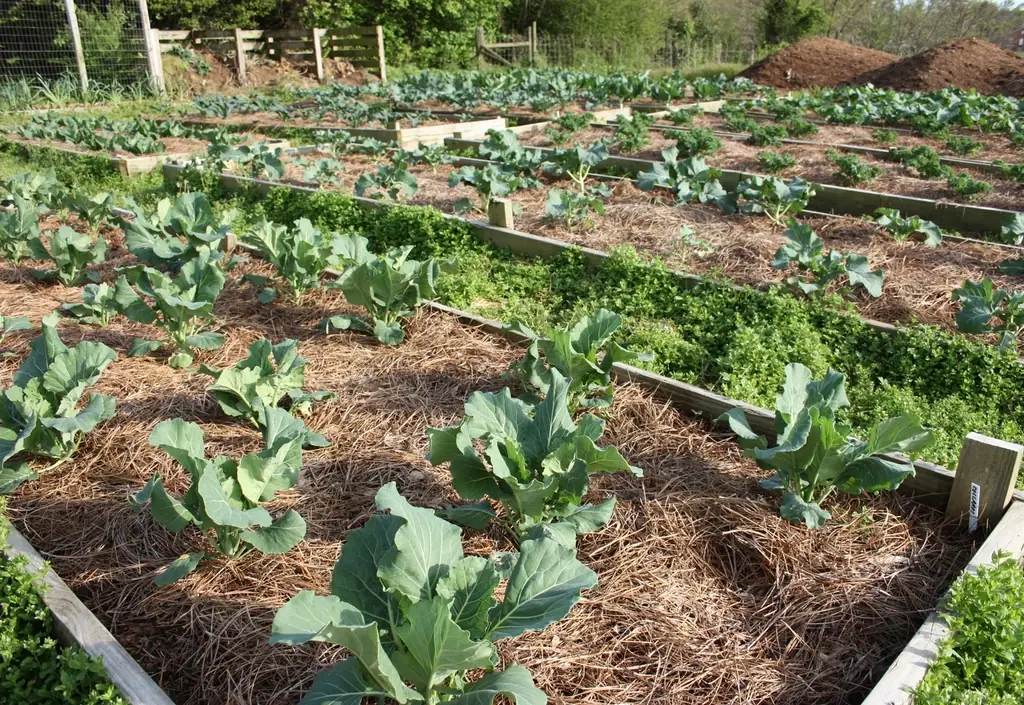
The goal is simple: full sun for each tomato, decent airflow, and then herbs and flowers ringing the outside like helpful little sidekicks. I keep anything tall or sprawly away from the stems, and I put the stuff I harvest all the time where my hands naturally reach.
For a 4-by-8-foot bed:
- Place the tomatoes first. Two to four plants, depending on how big the variety gets and what you’re supporting them with. Two big indeterminates in cages, or up to four determinates or staked plants. Run them down the center line of the bed.
- Put basil along the side you walk on, so you can pinch and pick it without reaching through tomato leaves.
- Put marigolds or calendula in the corners, where they get light and stay out of the tomatoes’ way.
- Run chives or onions along one long edge. They’re easy to thin and pick there.
- Sow cilantro or dill in the early gaps. Sow in early spring, then let a few go to flower when it warms up.
- Mulch whatever soil is still bare. The companions shade some of it, but 2 to 3 inches of straw or shredded leaves does most of the work of holding moisture and stopping splash.
When you’re done, don’t just trust the plan—step back and actually look at it. You should be able to see tomato stems, reach the fruit without wrestling foliage, and the leaves should flutter when a breeze comes through. If it feels crowded, it is. Pull something out.
How should timing affect companion planting?
Timing makes or breaks this. I like to think of it as a relay: cool-weather herbs and root crops start first, warm-weather flowers join in when the soil’s ready, and anything that gets big has to be placed so it doesn’t end up shading the tomatoes later.
Tomatoes go out after your last frost date, once nights stay above about 50°F and the soil is near 60°F. Roughly, that’s mid to late May in zone 5, early to mid May in zone 6, mid April to early May in zone 7, and March to early April in zones 8 and 9. Check the frost date for your own zip code, because it can vary a lot inside a zone.
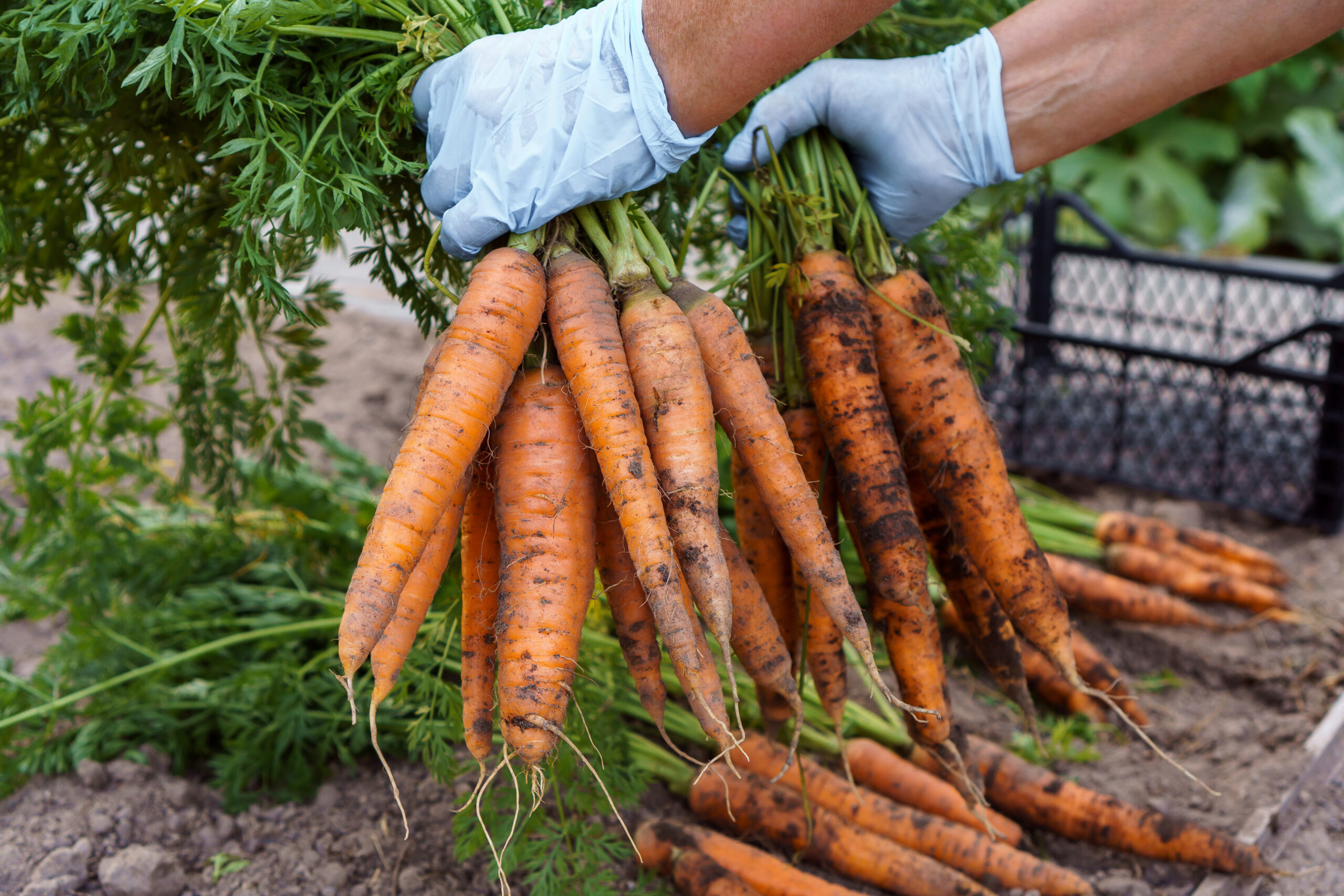
Cilantro, parsley, dill, onions and carrots can go in 2 to 4 weeks before that. They’re up and moving while the tomato transplants are still small and not hogging the whole bed. By the time tomatoes start casting real shade, a lot of these early plants are either ready to harvest—or they’ve bolted and are busy flowering for the beneficial insects.
Basil, marigolds, nasturtiums and borage want warm soil. I plant them with the tomatoes or a week or two after, once nights are consistently mild. Put them in too early and they just sit there looking miserable, and you’ll probably be replanting anyway.
One more thing that helps: stagger your sowings. Instead of one giant cilantro patch that bolts all at once, I sow a short row every 2 to 3 weeks in spring. Same idea with flowers, which keeps beneficial insects fed—drop in a second round 3 or 4 weeks after the first. When something is blooming from May into fall, the helpful insects stick around way longer than they do with one big burst and then nothing.
Pest management with companion planting
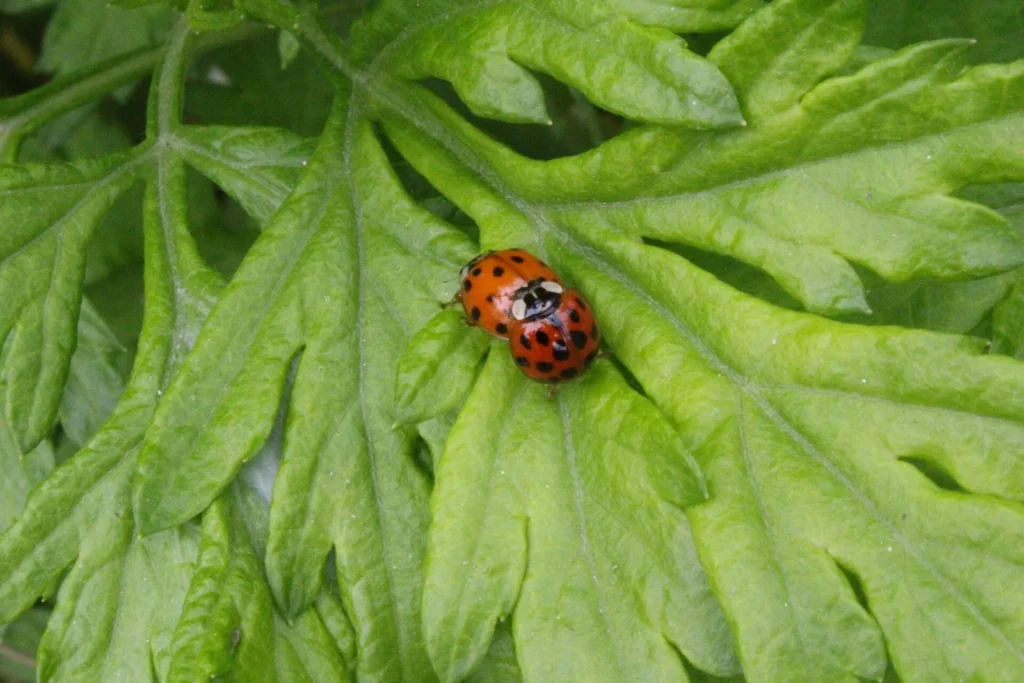
Companion planting can make a tomato bed tougher for pests to “read,” and friendlier for the insects that eat them. But tomato companion pest management is not a set-it-and-forget-it trick. I still walk the bed, check leaves, prune for airflow, pull the junky stuff, and keep the soil in good shape.
Tomato pests find plants by smell, by sight, and sometimes just by dumb luck. A bed that’s nothing but tomatoes is basically a big neon sign—everything looks and smells the same. Once you mix in herbs and flowers, that signal gets noisier. Pests will still show up. They just might wander more, arrive slower, or stack up on a trap plant where you can actually spot them.
Beneficial insects also need food before the pest situation gets out of hand. Adult hoverflies, tiny parasitic wasps, and lots of predator bugs rely on nectar or pollen at some point. That’s why the small, shallow flowers matter—cilantro, dill, parsley, calendula, sweet alyssum. The insects we want are often tiny, and they need blooms they can actually reach.
If you’re using trap crops, you’ve got to keep tabs on them. Nasturtiums covered in aphids can be a good sign—if the aphids stay there where you can deal with them. But if you let that trap plant turn into an aphid nursery right next to tomatoes that are already stressed, it flips from helpful to harmful. I check trap plants about once a week, snip off the worst clusters, and watch for lady beetles or hoverfly larvae moving in.
Hornworms deserve their own paragraph. They’re those big green caterpillars—up to about 4 inches—and a couple can defoliate a tomato plant fast, usually starting mid-summer. Basil, marigolds, and a mixed planting might make the bed a little less inviting, but in a home garden the thing that actually works is finding them. I look for stripped stems near the top and those dark green droppings on leaves below. When I find hornworms, I pick them off and drop them in soapy water. If one has white, rice-like cocoons on its back, I leave it alone. That’s braconid wasps at work, and they’ll hatch and hunt more hornworms for you.
Soil, water, and nutrient considerations
Companions absolutely change what’s going on around tomato roots. They shade the soil, slow down drying, reduce splash onto leaves, and feed soil life through their roots. The catch is they also drink water and use nutrients, so whether this helps or hurts comes down to spacing and how you water.
Bare soil around tomatoes bakes, crusts over, and splatters when it rains—or when you water from above. That splash flings soil (and whatever disease spores are hanging out in it) onto the lower leaves. That’s a big reason I mulch and also remove the lowest tomato leaves once the plants are a couple feet tall. Low companions for tomatoes can cover some ground, but if blight is a regular visitor in your garden, don’t treat them like a mulch replacement.
Water is usually the first thing to run short. A tomato plant surrounded by basil, calendula, beans, and nasturtiums is sharing the same moisture with all of them. Most tomatoes want about 1 to 2 inches of water a week—more in a heat wave—and a crowded bed often needs extra. In a shallow bed or during a dry spell, the signs show up fast: curled leaves, blossoms dropping, small fruit, uneven ripening, and blossom end rot when watering swings from “soaked” to “bone dry.”
Feed tomatoes like tomatoes. Companion plants don’t change how much a fruit-loaded tomato pulls from the soil. If growth is weak and leaves are pale, I look at nitrogen, root health, watering consistency, and soil temperature first. If the plants are huge and leafy but barely fruiting, that usually screams too much nitrogen—back off, and make sure they’re getting full sun.
Over a few seasons, mixing plants with different root types really can improve the soil. Fine herb roots, fibrous flower roots, and deep tomato roots all work different layers. Composting spent plants—or chopping and dropping them as mulch—adds to it, too. Just don’t expect it to transform everything in one summer.
Common mistakes in tomato companion gardening
Most of the problems I see with companion planting come down to crowding, weird timing, and hoping the companions will rescue tomatoes that are stressed for basic reasons. If you don’t have enough sun, water, fertility, or airflow, even the best companion plants for tomatoes can’t make up for that.
The usual mistakes:
- Planting right up against the stem, which makes watering, pruning and checking for pests harder.
- Too many big, fast growers. Nasturtiums, borage and beans can each take over a small bed.
- Flowers shading young tomatoes. Tomatoes need direct sun to grow well and set fruit.
- Ignoring humidity. Thick underplanting makes leaf diseases worse in wet climates.
- Treating companions as fertilizer. Beans and herbs don’t replace compost, regular feeding or good soil prep.
- Grouping relatives. Tomatoes, potatoes, peppers and eggplants side by side concentrate nightshade problems.
- Forgetting how you’ll pick. If you can’t reach the back of the cage, you’ll miss ripe fruit and the first signs of pests.
A tomato bed that’s working usually looks a little… edited. Not stuffed. You can water at the base, pull yellowing leaves, and harvest without snapping stems. And you notice problems early, while they’re still easy to handle.
A practical companion planting recipe
For most home gardens, I’ve found you don’t need a complicated mix. One strong-smelling herb, one flower that feeds beneficial insects, one allium, and one early crop is a perfect “starter kit.” It gives you real variety without turning the bed into a crowded mess.
A mix that works in a standard 4-by-8 bed:
- Tomatoes: The main act. I stake or cage them at planting time, before the plants get big and floppy.
- Basil: Two or three plants along the sunny edge so I can grab leaves fast—and because that scent doesn’t hurt.
- Calendula or marigolds: Three or four plants in the corners or along the front where they get light but don’t hog space.
- Chives or garlic: A small clump or short row down one side. Close by, yes. Packed around the stems, no.
- Cilantro or dill: I sow it early in spring, then let some of it bolt and flower once the heat kicks in.
- Mulch: Straw, shredded leaves, compost, or whatever clean mulch you’ve got—about 2 to 3 inches deep.
That combo covers a lot: it muddles pests, feeds helpful insects, protects the soil, uses early-season space, and keeps everything easy to reach. Then you just keep up with normal garden stuff—water, a little pruning, and steady picking.
With containers, I scale it way down. Tomato gets its own pot (at least 10 gallons for a determinate, 15 to 20 for an indeterminate), basil goes in a pot right next to it, and flowers get their own container close enough to still pull insects in. Same idea, way less fighting over one bucket of soil.
How to choose the right companions for your garden
I wouldn’t pick companions off a one-size-fits-all chart. Your setup matters. A hot, dry balcony in Arizona, a sticky humid backyard in Georgia, and a cool raised bed on the Oregon coast are basically three different planets—so the “right” companions (and spacing) won’t match.
Before you plant, I’d ask yourself:
- How much sun does the bed get? Tomatoes get the best real estate; companions get what’s left.
- Is it humid or dry where you are? If it’s humid, I go wider with spacing and avoid a thick, low carpet of plants.
- What pests were a problem last year? I get trap crops and insect-friendly flowers in before those pests usually arrive.
- How deep is the soil? Shallow beds and containers can’t support as many companions without stressing everything.
- Can you reach every tomato? If you can’t easily get to the back of the cage, it’s time to simplify.
- Will the companion finish before the tomatoes shade it out? Early crops belong where the tomato canopy will cover later.
- Does it get the same diseases as tomatoes? I keep nightshade relatives separated when I can.
And I’m big on notes. Nothing fancy—just a few lines each season: what bloomed when, where aphids showed up first, whether basil turned into a thicket, which corner stayed damp. After two or three years, those little notes teach you more about your own yard than any planting diagram ever will.
The best companion plants for tomatoes are the ones that help out without stealing what the tomato needs most. Nail the basics first—sun, deep soil, steady watering, mulch, and airflow. Then add herbs, flowers, alliums, and early crops around the edges of the tomato bed and see what actually thrives in your beds.