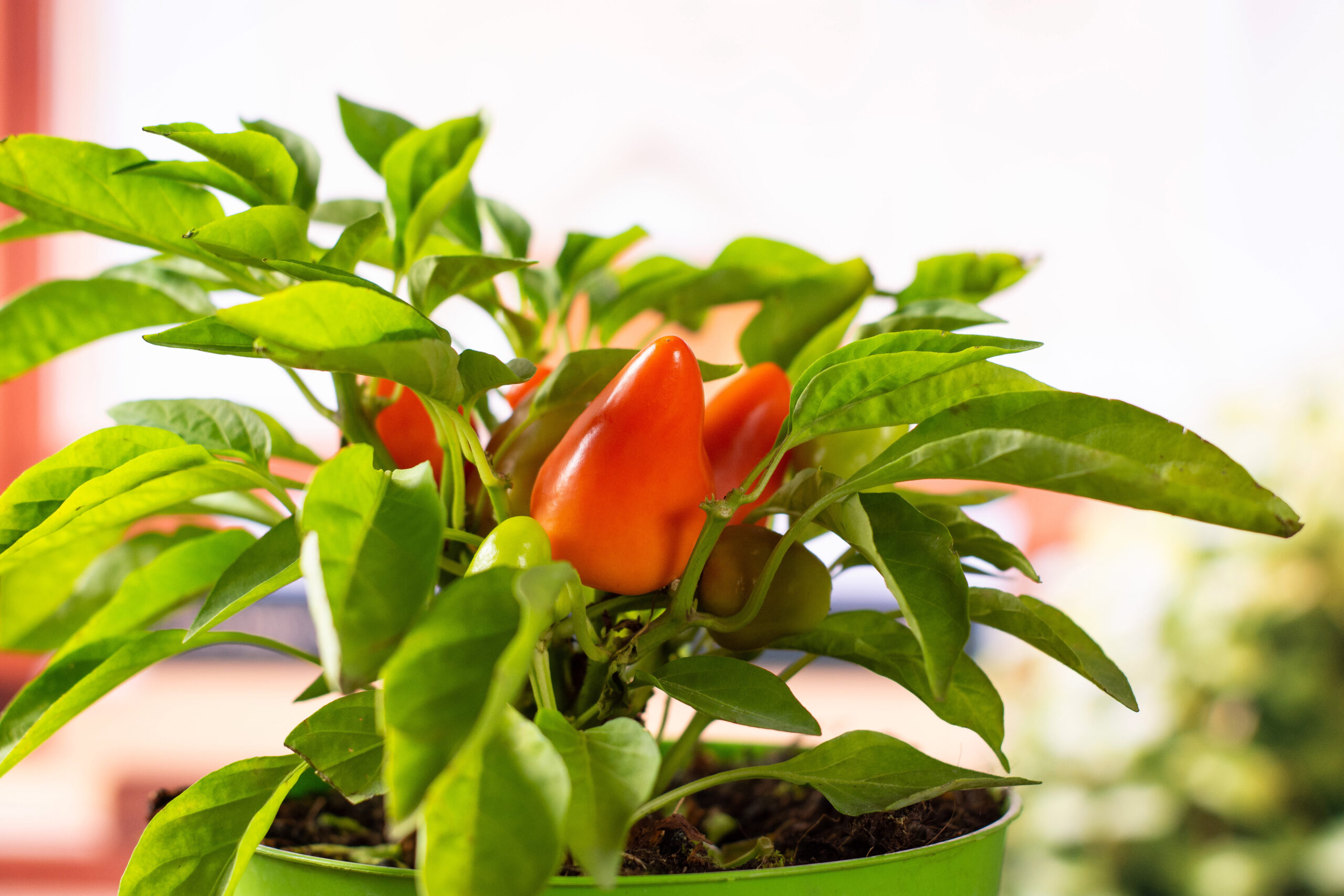
Every October, perfectly good pepper plants land on the compost heap. That’s a waste, because a pepper isn’t really an annual. Illinois Extension describes chili peppers as perennial subshrubs native to South America. We grow them as annuals only because our winters get too cold for them (Illinois Extension).
Keep frost off one and it can go on for years. So how to overwinter pepper plants indoors isn’t about a winter harvest. You’re babysitting a living stump till spring, and in return you get a plant that’s months ahead of any seedling.
Can every pepper plant spend the winter indoors?
Most healthy ones, yes. A plant with mottled yellow leaves, or aphids you never beat back in August, can stay in the garden. Illinois Extension warns that bacterial diseases ride along on transplants, and the same logic applies here. Leave behind any plant with spotted leaves or stem cankers, the sunken, dead-looking patches on a stem.
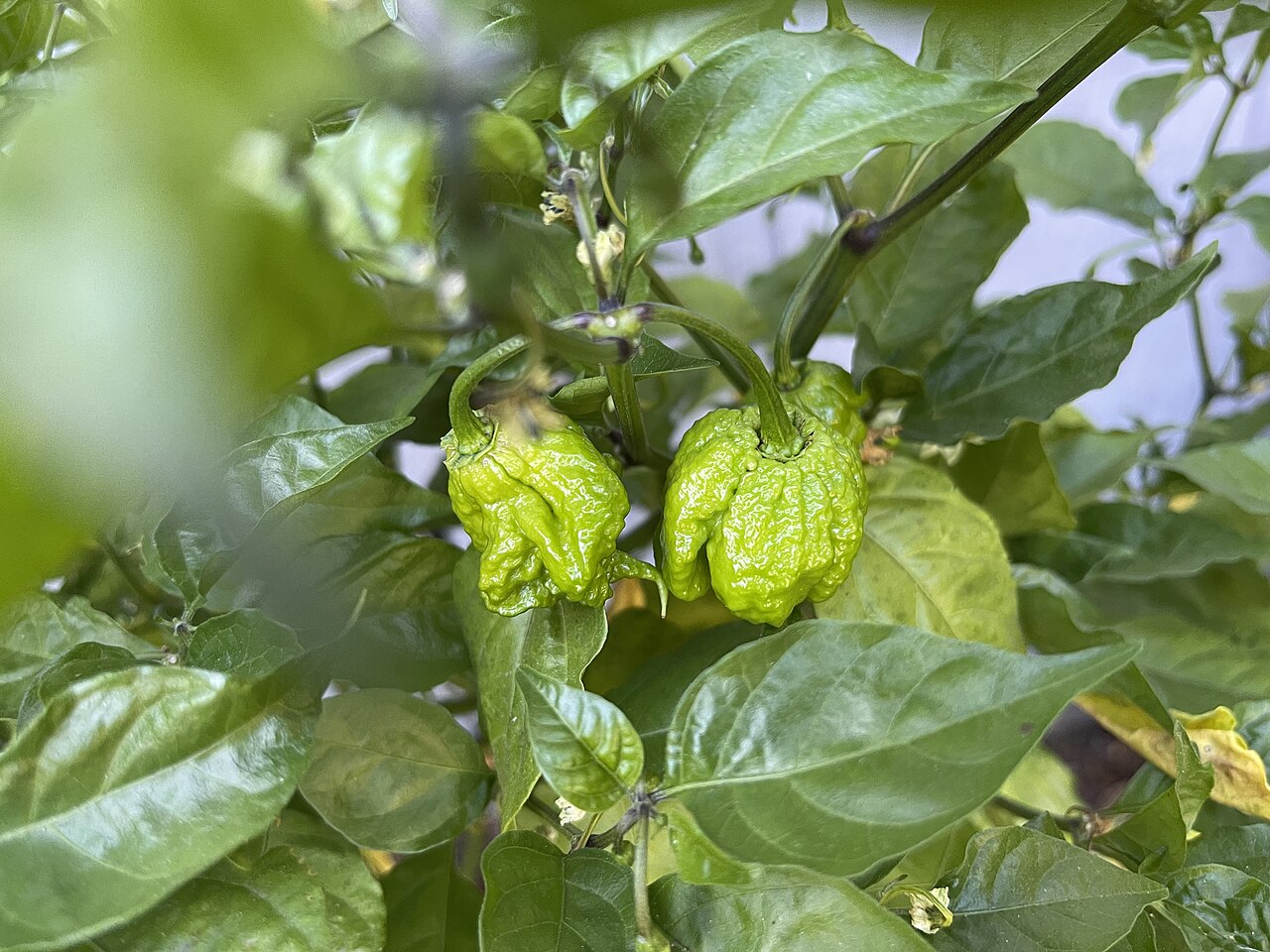
Hot peppers are the best bets. Habaneros and Thai chilies crawl along from seed, and their stems go woody with age.
Wondering how to overwinter bell pepper plants? Same routine, only you’ll cut them back harder. A Michigan expert on Ask Extension warns sweet peppers are less resilient than hot ones (Ask Extension).
How to overwinter green pepper plants is really the same question. A “green pepper” is a bell picked before it colors up, per Illinois Extension, so it’s the same plant and the same care.
What do you need before you start?
Pruners, soap spray, a saucer and a pot with holes, filled with bagged mix. Garden dirt sets up like adobe in a pot. Gloves, if your plants are hot ones, since Illinois Extension says chile handling can leave skin, noses and eyes burning.
The calendar matters more than the gear, though. Per Illinois Extension, peppers stall when nights dip under 50 to 55°F, leaves can yellow and blossoms fall.
Here are Virginia Cooperative Extension’s frost dates by USDA zone. Each one is an average with a 50% chance, so in about half of all years the fall frost comes earlier and the spring frost lingers later (Virginia Tech SPES-673):
| USDA zone | First fall frost | Last spring frost |
|---|---|---|
| 6a / 6b | Oct 5–15 | Apr 25–May 15 |
| 7a | Oct 15–25 | Apr 15–25 |
| 7b | Oct 25–Nov 5 | Apr 5–15 |
| 8a | Nov 1–15 | Apr 1–15 |
| 8b | Nov 15–25 | Mar 15–Apr 1 |
Outside Virginia, treat those as ballpark. Want a date for your own town? Type your county into the Midwestern Regional Climate Center freeze date tool, then find your zone on the USDA Plant Hardiness Zone Map. Zone 6 in mid-October? You’re past the average date already.
1. Which pepper plants are worth saving?
Pick keepers before the pruners come out. Fat stems and fresh tips say yes. Two good plants beat six sad ones, and they hog a lot less windowsill.
2. How far back should you cut a pepper plant?
Why bother pruning pepper plants for winter? Less plant, less thirst. It’s lighter to haul in, too, and the weak light by a window can only feed so many leaves anyway.
One Colorado Master Gardener on Ask Extension keeps three main branches. Strip their leaves, then cut each one just above its first branch point or leaf node (Ask Extension). It’ll look like you butchered it. That’s normal.
Salsa gets the ripe ones, and any blossoms or marble-sized fruit come off too, since the plant can’t afford them now. Leave a node or two per branch. Nodes are those little bumps where leaves and side shoots grow, and come spring that’s exactly where new growth pops out. If it’s a habanero, keep the gloves on for this part. Your eyes will thank you.
3. How do you clean off pests before bringing a pepper inside?
Bugs love a free ride indoors. Maryland’s Home and Garden Information Center (HGIC) lists spider mites, thrips, mealybugs and aphids, usually camped under leaves or in the crotch where leaf meets stem (Ask Extension, UMD HGIC). Your living room has no rain, wind or ladybugs to thin them out.
Sticky “honeydew” on lower leaves means aphids, per Illinois Extension. Hose it off, undersides too, use the soap by the label if anything’s still crawling, and keep it away from houseplants for two weeks.
Smokers have one extra step. Illinois Extension says anyone who uses tobacco should wash up with soap and water before handling pepper plants, because tobacco mosaic virus can spread that way.
4. How do you dig up and pot an in-ground pepper plant?
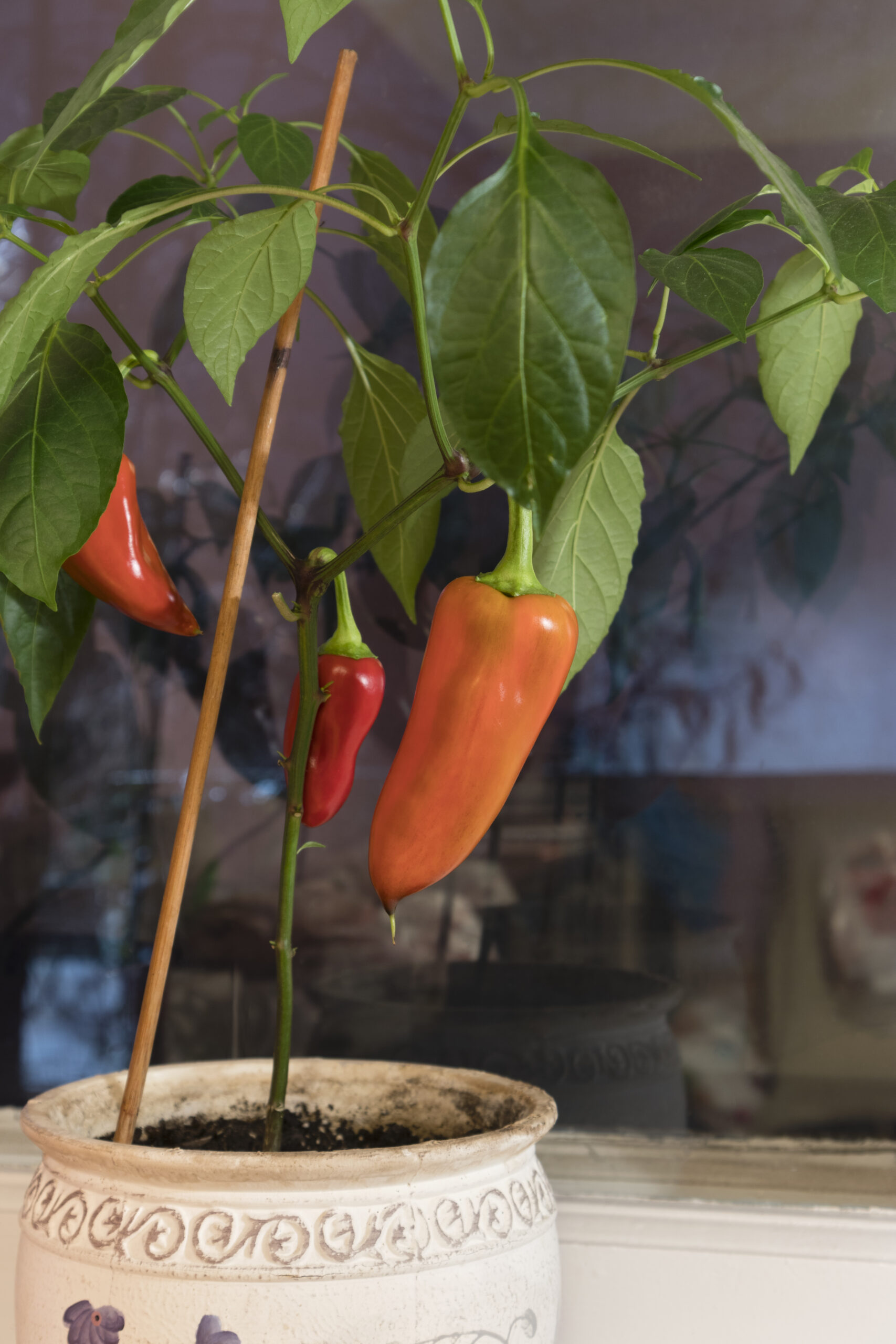
Container plants skip this one. Garden plants come up best when you circle wide with a spade. Yank the stem and off come the hair-thin feeder roots that do most of the drinking.
The Colorado answer even washes every crumb of garden soil off, flushing soil pests out too. Same depth, fresh mix, snug pot (a huge one stays wet for weeks).
5. Should your pepper go dormant or keep growing?
| Approach | Temperature | Light | Water | Result |
|---|---|---|---|---|
| Dormant | About 50–60°F | A little | A small drink every 3–4 weeks | Bare stems that leaf out in spring |
| Active | Nights above 50°F, days near 70°F | Window plus grow light | When the top inch dries | Leaves, maybe a few peppers |
Dormant figures come from the Colorado answer and a Minnesota Master Gardener (Ask Extension), active ones from Michigan. HGIC adds that a dormant pepper may scrape by if it never drops below 40°F (Ask Extension).
So how does a pepper hang on for months in a dim garage? Picture a household budget. The leaves earn the income: they use light to turn water and carbon dioxide into sugar, and in a cold, dim garage they hardly earn a thing. Respiration is the spending, sugar burned for energy. Cold cuts that back too, so the plant gets by.
Naked stems are okay, provided they’re green and firm. Peppers grown the warm way will flower. Pepper flowers are self-pollinating, UF/IFAS says, but a kitchen has zero bees to give them a nudge. You’re the bee now. Flick a stem or give the pot a little jiggle.
6. What’s the best spot indoors for a pepper plant?
A steady spot beats a perfect one. Leaves pressed against frosty glass get chilled, and the blast from a heat register dries them out. For the dormant crowd, a chilly spare bedroom with a window works, or an attached garage that’s never dropped below freezing.
Growing plants want more light than a December window offers. University of New Hampshire Extension compares a plant’s light needs to a bucket that has to be filled every day. A pepper ripening fruit has a bigger bucket than a young seedling. The day’s total is called the daily light integral.
Pull the lamp back and that total drops fast. One LED bar UNH tested needed 8 hours a day hung 8 inches above plants, versus 16 hours at 20 inches (UNH Extension).
The bulb counts too. UNH’s seedling math has ordinary fluorescent shop lights, kept under a foot off the leaves, running about 22 hours a day, where a quality horticultural LED might get there in 10. Short-change it day after day and stems go skinny and pale, leaves spaced way apart. Bad news: extra light later won’t pull a stretched stem back down. It only stops more of it.
Got a greenhouse? Then how to overwinter pepper plants in a greenhouse is mostly a heating question. A University of Florida team studying commercial greenhouse peppers found nights of about 64°F gave ideal seed set. Cold nights made the pollen work worse (UF/IFAS).
Even in Florida, the same team found winter days got warm enough but nights didn’t, so growers may need to heat at night. That’s for fruit, and plants you’re only keeping alive can run colder.
Sunny afternoon in January? Crack the vents. HGIC says heat building up in a closed winter shelter is a wake-up call for aphids, whiteflies and mites.
7. How much water does a pepper need in winter?
Roots respire too. That’s the sugar-burning again, and down there it runs on oxygen sitting in the little air gaps of the mix. Keep those pockets flooded for days and roots suffocate, then rot. HGIC’s wording is that peppers “don’t have a good tolerance for prolonged soil sogginess.” Their advice is to wait till the top inch or two feels dry, soak it, then tip out what’s left in the saucer.
That wait runs longer than in July. Short days and cool rooms slow a plant’s growth and its drinking, Colorado State University Extension notes, so a pot that dried in two days in summer can sit damp for ages.
8. Should you feed peppers over the winter?
Resting peppers don’t eat. Feed one in low light and you get floppy pale shoots, an aphid buffet. Under a strong lamp with real new leaves, half-strength is fine.
9. Which pests attack peppers indoors over winter?
Peek under leaves weekly. Fungus gnats are the other winter regular. Colorado State University Extension says these little dark flies lay eggs in damp potting mix. Their larvae live in the top 2 to 3 inches and eat fungi mostly, roots sometimes.
Late fall and winter is when you’ll notice them most. Part of the reason, per CSU, is plants that spent summer outside bringing them along. Soggy, peat-heavy mix is gnat heaven.
Drying the top 1 to 2 inches between waterings is their number one fix. Neat test: push a slice of raw potato into the mix, and larvae will move onto it within a few days. Yellow sticky cards set at the edge of the pot catch the adults (CSU Extension).
What should you do if leaves drop or stems die back?
Leaf drop right after the move is a reaction to far less light and means little on its own. The stem is the real test.
Thumbnail a scrap of bark: green under there means alive, and anything brown and shriveled at the tips can be clipped back to green.
Wilting in wet mix is a different story. Tip the root ball out and have a look. Pale and firm is good news. Dark, mushy, smells sour? Root rot, sadly.
10. How do you wake the plant up in spring?
Find your last frost date on the table up top and back up two or three weeks. That’s roughly when an Ohio expert on Ask Extension hauls dormant plants into a heated room and starts watering again (Ask Extension). Bare wood sprouting tiny green buds? Turn up the light, water a touch more, feed weakly.
Hardening off comes next and takes about a week. Shade for an hour or two at first, more sun each day after, then into the ground when nights stay above 50°F.
So that’s how to overwinter a pepper plant, start to finish. Come May you’ve got a woody little trunk with roots already in place, which beats any seedling off the starting line.
Starting a few fresh ones too? Our guide on how long seeds take to germinate covers the timing. Peppers that live in pots full-time will do well with our budget container vegetable garden ideas, and the vegetable garden prep guide handles the bed.
What mistakes kill peppers kept indoors over winter?
Most losses trace back to a short list: skipping the bug check, leaving too much top growth and potting in garden soil. Watering by the calendar, feeding a sleeping plant and skipping hardening off round it out. That bare, chopped-back stump with firm stems is doing just what it should, and kept clean, a little dry and frost-free, it can be a full pepper plant again by May.
Sources
- Illinois Extension, Peppers
- Virginia Cooperative Extension, Home Garden Vegetable Planting Guide (SPES-673)
- USDA ARS, Plant Hardiness Zone Map
- Midwestern Regional Climate Center, Freeze Date Tool
- Ask Extension expert answers 812297 (CO), 782282 (MN), 855650 (MI), 887184 (OH), 890162 and 771476 (UMD HGIC)
- UNH Extension, Growing Seedlings Under Lights fact sheet
- Colorado State University Extension, Fungus Gnats as Houseplant and Indoor Pests
- University of Florida IFAS, Production of Greenhouse-Grown Peppers in Florida